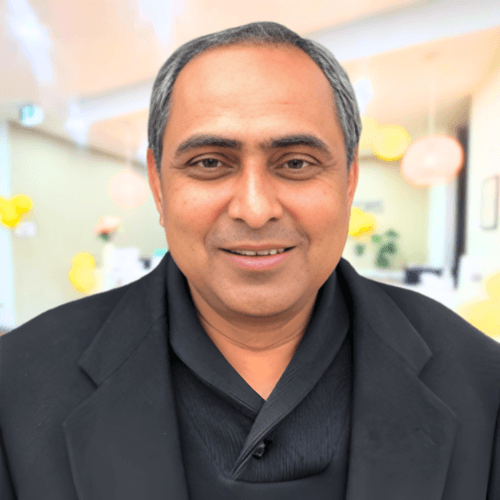
1 in 2 Australians will be diagnosed with skin cancer by age 70. Annual full-body skin checks save lives. At Botanic Ridge Doctors our skin-trained GPs (including Dr Dipankar Chakraborty FRACGP — with advanced certificates in skin cancer medicine and complex surgery) perform thorough dermoscopy-guided examinations and can biopsy or excise suspicious lesions onsite the same day, including flap and graft repair where needed.

Dr Chakraborty is a Fellow of the Royal Australian College of General Practitioners with advanced certifications in skin cancer medicine and complex skin cancer surgery. He provides comprehensive skin assessments, dermoscopy, biopsy and excisions — including flap and graft repair.
Dr Chakraborty is also the lead skin doctor at Aurora Skin Clinic in Wangaratta, travels widely across rural Victoria providing skin cancer treatment, and teaches registrars and students on skin cancer medicine and surgery.
Two in three Australians will develop skin cancer in their lifetime. The good news: detected early, almost all skin cancers are highly treatable. The trick is regular professional checks — annually for most people, more often if you're high risk.
The deadliest skin cancer. Caught at early stage, 5-year survival is >95%. Caught late, <30%. Annual checks dramatically tilt the odds.
The most common skin cancer. Rarely fatal but can disfigure if left. Easily excised when caught early.
Second most common. Faster-growing than BCC and can spread. Surgical excision is curative when caught early.
Pre-cancerous sun-damaged spots. Treated with cryotherapy, creams or PDT to prevent progression.
Family history, sun exposure, previous skin cancers, any specific lesions worrying you.
You'll undress to your underwear behind a curtain (a chaperone is available on request). Your GP examines every area systematically — scalp, face, ears, neck, chest, back, arms, legs, between toes, soles of feet, groin, and bottom.
Suspicious lesions are examined under high magnification with polarised light, allowing your GP to see structures invisible to the naked eye.
Small biopsies and excisions can usually be done the same appointment under local anaesthetic. Larger excisions or those requiring flap/graft repair may be booked into a longer surgical slot.
You'll leave with a written plan: next routine check date, any pathology pending, and what to watch for at home using ABCDE criteria.
A dermatoscope is a high-magnification, polarised-light device that lets your GP see microscopic structures in moles and skin lesions. It dramatically increases diagnostic accuracy — clinically suspicious melanomas can be confidently distinguished from benign lookalikes, and many unnecessary biopsies are avoided.
All our skin checks use dermoscopy as standard.
Our skin-trained GPs perform the full range of skin cancer procedures onsite — meaning no separate dermatologist referral, no hospital, no long waits.
Small tissue sample sent for pathology. Local anaesthetic, takes 5 minutes, single stitch (or none).
Full removal with safety margins. Local anaesthetic, single layer of stitches, removed at your follow-up appointment.
For larger or facial excisions where direct closure isn't possible. Skin from a nearby area is rotated into the wound, or a graft is taken. Performed by Dr Chakraborty.
Liquid nitrogen for solar keratoses, warts and superficial pre-cancers. No anaesthetic needed.
Imiquimod, 5-fluorouracil cream for field treatment of sun-damaged areas.
For complex melanomas, large facial reconstructions or rare conditions, we coordinate fast referrals to specialist dermatology and plastic surgery.
If you tick any of these, we recommend skin checks every 6–12 months rather than annually:
Most excision sites heal beautifully with simple care. We provide written aftercare instructions including wound care, when to wash, when stitches come out, signs of infection, and when to call us.
Annually for most adults. Every 6 months if you've had a previous skin cancer, have many atypical moles, or have a strong family history of melanoma. Children rarely need checks unless concerning lesions appear.
A simple at-home checklist for melanoma: Asymmetry, Border irregular, Colour varied, Diameter >6mm, Evolution (changing). Any of these warrants a check. Also: any new spot, an "ugly duckling" that looks different from the rest, or any lesion that bleeds, itches or doesn't heal.
Private fee may apply — please contact reception to confirm fees when booking.
Some extras policies cover GP-led skin checks. Check with your fund. We provide itemised receipts.
Only borderline lesions, with your consent — photographs help us track change over time and avoid unnecessary biopsies. Photos are stored securely in your medical record.
Bulk-billed consultations for eligible Medicare patients. Some procedures may attract a private fee — please contact reception to confirm costs at booking. Open 7 days, walk-ins accommodated where possible.
Important: The information on this page is general health information only. It is not a substitute for personalised medical advice from a qualified health practitioner. Outcomes vary between individuals — your GP will assess your specific situation and recommend the right approach for you. If you have urgent symptoms, please call 000 or attend your nearest emergency department.
Follow us on Instagram and Facebook for clinic updates, health resources and behind-the-scenes moments from Botanic Ridge.